Blog
Building a Pipeline Strategy for 2025: Top Challenges and Future Proofed Opportunities

Sales leaders are off to the races building pipeline for 2025 targets, a year that promises to bring both hurdles and opportunities to pipeline development. From extended sales cycles and tighter budgets to emerging technologies like AI transforming top-of-funnel lead generation, the landscape of building a strong sales pipeline is shifting dramatically. Let’s unpack what 2025 will bring and how to introduce innovative solutions for building a sales pipeline that drives success in 2025.

The Evolving Dynamics of Pipeline Development
Sales teams have been feeling it for a long time, and their pipeline data backs it up – the dynamics that drive the sales pipeline are changing. Understanding the challenges reshaping pipeline development is essential to understanding where to go next. Recent data and trends paint a clear picture:
1. Longer Sales Cycles
Decision-making has become a team sport with more deliberate processes to make buying decisions. Sales team have to make the sale to several stakeholders before securing the contract which is drawing out sales cycles. Gartner reports that the average B2B buying cycle has lengthened by 22% over the past five years, as buyers involve more stakeholders and demand detailed value justifications. For sales teams, this means that nurturing prospects requires more patience, precision, and consistency – making pipeline development an even more strategic effort.

2. Tighter Budgets
Economic uncertainty is forcing companies to be thoughtful about spending. According to Forrester, 65% of businesses plan to reduce discretionary spending in 2025, putting pressure on sales teams to justify their solutions and demonstrate ROI more effectively than ever. In turn, this tighter scrutiny impacts the speed at which budgets are approved and deals are closed.
3. Shifts in Channel Effectiveness
Traditional lead generation channels such as email marketing and paid ads are seeing diminishing returns due to oversaturation. For example, user communities, like HubSpot’s, universally show companies experiencing email open rates declining by 8% or more, while acquisition costs for paid ads increased with more competition than ever. As channels become less effective, sales and marketing leaders must diversify their strategies to sustain top-of-funnel growth.

Opportunities in Building a Sales Pipeline
While challenges abound, 2025 also brings new opportunities to rethink pipeline strategies, especially with advancements in technology and shifts in buyer behavior.
1. The Role of AI in Lead Generation
While some companies still treat AI like a buzzword, it’s actually a practical tool revolutionizing how to build a sales pipeline. Lead generation AI, like Sailebot®, goes beyond automating repetitive tasks; it delivers hyperpersonalized outreach at-scale, and top-notch market intelligence. By scouring data from multiple channels, AI identifies high-quality leads and enriches them with actionable insights—a game-changer for top-of-funnel activities.
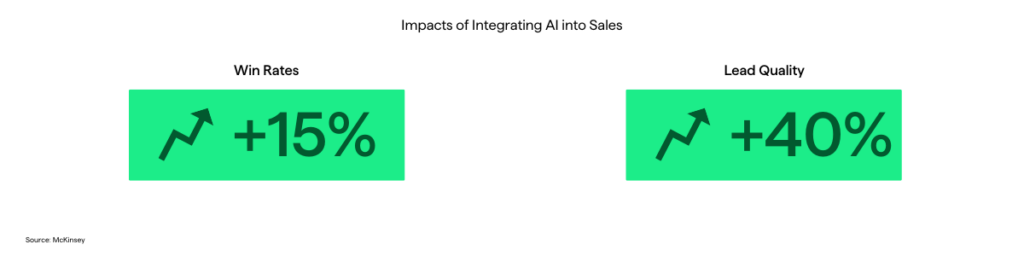
Consider this: McKinsey’s research shows that companies integrating AI into sales see a 15% increase in win rates and a 40% improvement in lead quality. These gains stem from AI’s ability to analyze vast amounts of data quickly, predict buyer behavior, and tailor engagement strategies in real-time.
2. Embracing Emerging Pipeline Sources
Social selling, partnerships, and community-driven channels are growing in prominence as buyers seek authentic connections. LinkedIn data shows that 62% of buyers are more likely to respond to salespeople who share relevant content or mutual connections. Sales teams that leverage these emerging channels to build trust and demonstrate value can gain a competitive edge.
3. Enhancing Team Efficiency with Pipeline Solutions
Pipeline solutions powered by AI aren’t just for lead generation—they can enhance the entire sales process. For example, AI tools can automate follow-ups, schedule meetings, and even provide insights into which leads are most likely to convert. This reduces administrative burden, allowing sales teams to spend more time building relationships and closing deals. Harvard Business Review highlights that sales teams using AI-driven tools report a 50% reduction in time spent on non-selling activities.
How to Build a Sales Pipeline for 2025
Building a robust pipeline in 2025 requires a strategic approach that adapts to these evolving dynamics. Here’s how to get started:
1. Refocus on Targeted Lead Generation
Invest in AI solutions that can refine your lead generation strategy. Tools like Sailebot® deliver hyperpersonalized outreach by learning your voice and tone and then analyzing buyer behavior, industry trends, and job roles also to customize communication to each prospect. By focusing on higher-quality leads, your team can engage in more meaningful conversations that drive results.
2. Diversify Your Channels
Don’t rely solely on email or paid ads. Explore channels like social selling, webinars, and partnerships to reach your audience where they are. For example, LinkedIn offers a goldmine of opportunities for sales professionals to connect with prospects through personalized content and engagement.
3. Leverage Real-Time Insights
Use pipeline solutions that offer actionable insights in real-time. AI tools can track prospect engagement, provide health scores for your pipeline, and predict the next best action. These insights ensure your team focuses on opportunities with the highest likelihood of success.
4. Nurture Relationships Over Time
With longer sales cycles, it’s crucial to stay top-of-mind with prospects. Build value through consistent, personalized follow-ups and educational content that addresses their pain points. AI can help automate these touchpoints without sacrificing the human touch.
5. Measure and Optimize
Finally, ensure you’re consistently measuring pipeline health and optimizing your strategy. Use tools that provide visibility into your funnel and track metrics like conversion rates, deal velocity, and lead quality. Regular reviews will help you identify what’s working and where adjustments are needed.
Looking Ahead: AI as a Strategic Partner
As you plan for 2025, one thing is clear: AI is not a replacement for human talent—it’s an amplifier. By embracing AI as a strategic partner, sales teams can navigate longer cycles, tighter budgets, and shifting channel dynamics with confidence. The key is to select AI solutions that prioritize the human element, empowering your team to build authentic relationships and deliver value at every touchpoint.
Companies that integrate AI strategically into their sales processes are setting themselves up for success in a challenging market. They’re not just keeping pace with the competition—they’re shaping the future of pipeline development.
Related Posts
blog


