Blog
The Counterintuitive Sales Hack: Why ‘No’ Might Be Your Best Lead Yet

Most sales reps feel that sinking feeling when a prospect replies, “We’re already using someone else” or “Now’s not the right time.” It’s easy to file it away as rejection and move on.
The Psychology Behind Objections
When someone takes the time to respond with an objection, they’re doing something important: they’re engaging with you. Consider this: they could have deleted your email or ignored it entirely. Instead, they:
- Read your message carefully enough to understand your offering
- Considered whether it might be relevant to their situation
- Took time out of their busy day to craft a response
- Revealed their decision-making criteria and current situation
This level of engagement indicates genuine interest, even when wrapped in a “no.”
Objections Are Buying Signals in Disguise
Research from sales organizations consistently shows that 80% of sales happen after the fifth follow-up attempt, yet most reps stop after just one or two rejections. The prospects who object aren’t saying “never”—they’re often saying “not now” or “not like this.”
When analyzed properly, objections reveal:
Timing Intelligence: “Not the right time” tells you about budget cycles, staffing changes, or project timelines
Competitive Landscape: “We use [competitor]” reveals who you’re up against and potential switching opportunities
Priority Mapping: “Lack of need” often means your messaging didn’t connect with their current pain points
Decision-Making Process: The language they use reveals their role, influence level, and how they think about problems
Turning Objection Data Into Revenue
Smart sales teams treat objections as market research. Here’s how you should use use objection analysis:
1. Refine Your Targeting
Consistent “lack of need” objections from specific industries or company sizes may indicate a need to adjust your ideal customer profile. Conversely, if certain segments mention competitors, they are actively evaluating solutions and are prime targets for nurturing campaigns.
2. Improve Your Messaging
Objection patterns reveal messaging gaps. If prospects consistently mention competitor features you don’t highlight, your positioning needs work. If they cite budget concerns, your value proposition might not clearly demonstrate ROI.
3. Optimize Follow-Up Timing
“Not the right time” objections often include timing clues. Prospects might mention budget seasons, contract renewals, or upcoming projects. This intelligence lets you schedule perfectly-timed follow-ups when their situation changes.
4. Develop Better Competitive Strategies
When prospects mention specific competitors, you gain insight into your competitive landscape. Track which competitors appear most frequently, in which market segments, and what language prospects use to describe them. This intelligence informs your competitive positioning and battle cards.
How Sailes Makes Objection Analysis Effortless
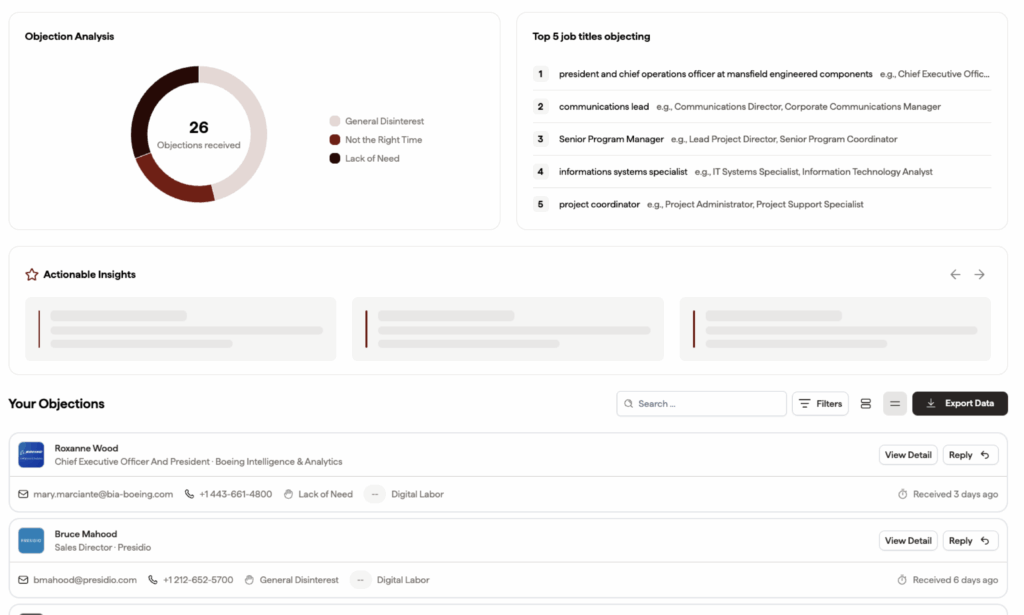
If all this sounds great but hard to do manually, that’s where Starboard steps in. We automatically capture and analyze objections from your outbound campaigns, turning every “no” into actionable intelligence. Our objection analysis module reveals patterns across your prospects, showing you:
- Which objection types are most common in your campaigns
- Top job titles that frequently object (and why)
- Industry-specific objection trends that inform your targeting
But analysis is just the beginning. Starboard also lets you respond directly to objections right from the platform. Whether it’s a timing concern, competitive comparison, or budget constraint, you can maintain the conversation professionally and keep the door open for future opportunities.
This integrated approach means you’re not just collecting objection data—you’re actively turning those insights into more personalized outreach and stronger prospect relationships.
The Bottom Line
In outbound sales, silence is the real enemy. Objections aren’t roadblocks—they’re neon signs pointing to timing issues, competitive insights, and gaps in your messaging that you can fix.
Every “no” you collect is free market research from someone who just told you how to sell to them in the future. The most successful sales teams don’t just handle objections—they harvest them for intelligence that drives higher win rates.
—
Ready to turn your objections into opportunities? See how Starboard’s objection analysis can transform your outbound results – contact our team today!
About the Author

Related Posts
blog


