Blog
From AI in Name Only to Real ROI: The Evolution of AI in Modern Sales

AI is everywhere, so why isn’t revenue up? AI is flooding the sales tech stack. Everywhere you look, there’s a new platform touting AI-powered features, promising productivity gains and faster prospecting. But for most sales leaders, one question remains: where’s the pipeline to show for it?
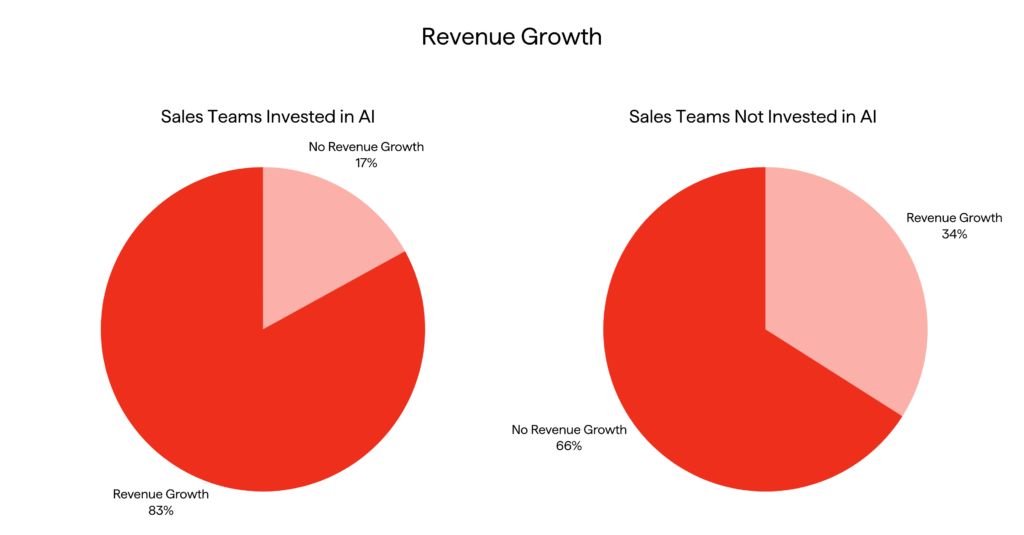
If you’re investing in AI for sales, it should show measurable gains. 83% of sales teams that have invested in AI experienced revenue growth compared to only 66% of sales teams without AI.
Many tools make big claims, but when it comes to actually impacting revenue, most fall short. Because what’s being marketed as AI is often just basic automation dressed up with buzzwords. These tools might help at a foundational level but they don’t fundamentally change the way your team sells. They certainly don’t scale with your business or get smarter over time.
AI in Name Only: Shiny on the Surface, Shallow in Substance
“Vanity AI” or “AI in Name Only” are terms we use to describe those tools. They look promising on the surface, but their value stops at surface-level automation:
- Pulling unreliable contact lists. Many providers rely on only 1-2 databases to source and enrich new contact data, which often leads to outdated and unreliable data.
- Generating generic email templates. Relying on static playbooks and sequences, AI for sales can fail to capture your team’s unique style and adapt to feel authentic and personalized to prospects. This means your message gets lost in an inbox of messages that all sound the same.
- Requiring constant manual oversight. While the AI might send the first message, some providers require human intervention to read replies and respond, leading to warm leads going cold before your team can even get to them. AI is supposed to reduce manual work not create more tasks for sales teams.
They’re like giving your sales team the same tech stack with a few extra automations; it might look cooler on the surface, but it don’t drive more meetings and create another point of complexity.
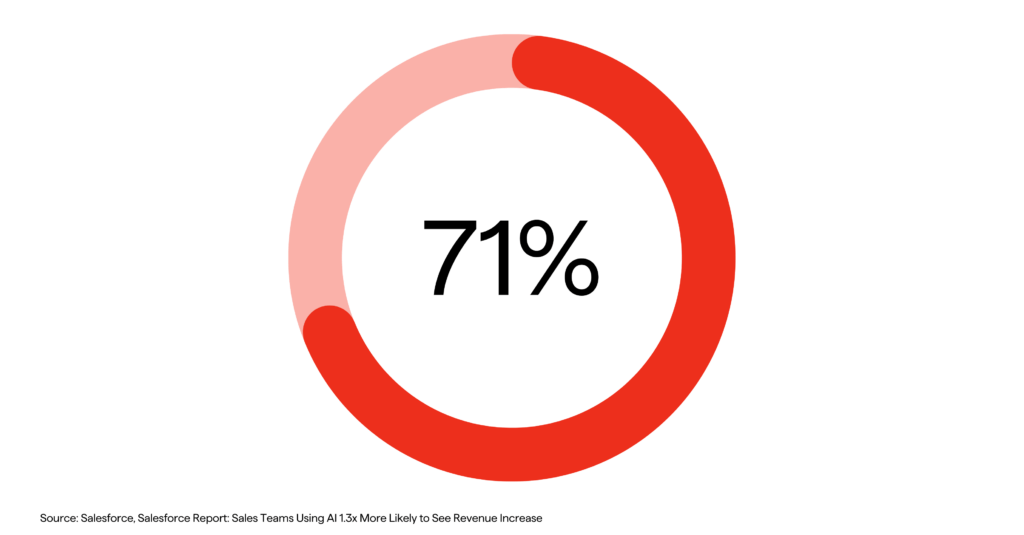
Fact: 71% of sales leaders say fragmented tech stacks reduce seller productivity
These tools are just another point solution your team has to manage, one that doesn’t learn, adapt, or meaningfully increase revenue.
What Real AI for Sales Should Actually Do
Let’s flip the script. If your AI doesn’t build intelligence, it’s not real AI; it’s just software with shortcuts.
Authentic AI that Delivers Real ROI:
- Builds intelligence analyzing deal data, buyer engagement, and more – Seek out AI that not only learns from your existing data but also learns from the Digital Labor it performs daily and from external data sources to leverage insights and refine it’s approach.
- Unique to each AE’s tone and communication style – Generic AI delivers generic results. AI should not be a one-size-fits-all approach but instead adapt to the tone, style, and nuances of each reps style. This creates a seamless prospect experience that feels authentic from start to finish.
- Interprets replies and responds automatically – Just sending emails in static sequences is not AI; it’s just a new twist on email automation. If AI requires your team to read each reply and take the next action manually, you need an upgrade. AI that delivers ROI sends messages dynamically and has the intelligence to read and interpret replies, crafting responses without the need for human intervention. AI should only pull your AEs in once there is an actionable revenue opportunity.
This is more than automation. It’s amplification.
From Automation to Intelligence
Here’s the difference:
- Automation sources data and sends messages. That’s about it.
- Intelligence sends hyperpersonalized messages that sound uniquely human; then learns from the outcomes, adapts, and prospects even smarter tomorrow.
Real AI creates a closed feedback loop, applying market learnings across industries, buyer roles, and your unique sales motions.
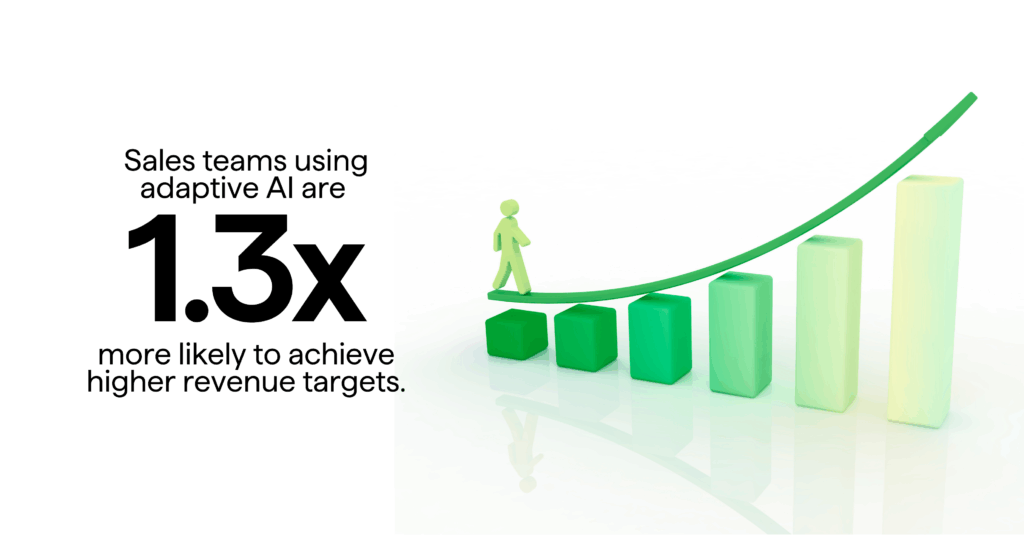
Fact: Sales teams using adaptive AI are 1.3x more likely to achieve higher revenue targets.
ROI That Compounds Over Time
When your AI gets smarter, your results get sharper and your ROI grows. You’re not just getting more activity, you’re getting better activity:
- Shorter time to pipeline: Leads are coming to your inbox, educated and ready to engage. AI-qualified leads, or AiQLs, are ready for the pipeline from your first meeting without the need for additional qualification.
- Improved Positive Response Rate: As you AI learns and leverages data, it will improve it’s approach to deliver improved positive response rates.
- Increased close rates and rep productivity: With a personalized AI sales companion, AEs can focus more time on closing mature revenue opportunities because they spend less time on tedious, manual prospecting.
AI should be your most coachable rep, learning from every deal, every reply, and every market signal, they will continually improve while your human AEs are freed to build more meaningful connections.
What to Look for (and Avoid) in AI Tools
Sales leaders don’t need more tech. They need the right tech. Here’s a quick checklist:
| Must-Have | Avoid |
| Learns from internal and external data sources | One-size-fits-all templates with static sequences |
| Handles full prospect conversations | Blast-only tools that send emails but cannot reply |
| Integrates seamlessly with your existing workflows | Requires additional data or tech subscriptions |
| Generates measurable pipeline with actual leads | Tools that only show vanity metrics like prospects sourced |
If your AI doesn’t do the heavy lifting, it’s just another thing your reps need to manage.
Demand More from Your AI
AI should be more than a checkbox. It should be your competitive edge.
As a sales leader, your job is to generate revenue, not wrangle tech. You deserve tools that learn, grow, and deliver results.
So the next time a platform says it’s AI-powered, ask: Is it vanity AI or does it deliver real ROI? If you need a cheat sheet, download our AI Buyer’s Guide to make sure you are getting the real deal.
Related Posts
blog


